Tampilkan postingan dengan label Marketing Management. Tampilkan semua postingan

Kamis, 07 Juni 2012

Big Mistake: Neglecting Your Corporate Blog


Your corporate blog can help you improve your brand profile, but it also provides a substantial SEO impact and marketing value when properly utilized.

While the original intent behind a corporate blog is to share news and timely information with visitors, the sharing platform also provides a substantial SEO impact and marketing value when properly utilized. Here are four reasons to stop neglecting your corporate blog today:

Search engines like to see sites updated regularly

Since your corporate blog is used to communicate recent news and upcoming events, it's a great way to leverage two very important freshness factors that speak to search engine spiders:

1. Search queries for recent events or hot topics that are trending on the web will favor fresher pages over older pages (e.g. "occupy Oakland protest" or "NBA lockout").

2. For queries on regularly recurring events such as annual conferences or presidential elections, Google returns the most recent content on the assumption that the user is planning for the upcoming event. This also applies to short-term repeat occurrences such as "NFL scores," "Dancing with the Stars," or "Exxon earnings."

It's important to remember that a blog post's "freshness" score is based on its inception date (the date it was discovered by Google), which fades in value over time. So, if you're blogging in anticipation of a large conference months in advance, you'll need to revisit that topic on your blog multiple times in order to continue being seen in queries for that event.

The takeaway: publish frequently on topics relevant to your organization and industry.

Enhance rapport with your site visitors (a.k.a. potential clients) by helping them

Think about the last time you Googled for a "how to" document or some other kind of advice from the Internet. Since you weren't shopping for a tangible product, you completely skipped over the sponsored links to e-commerce sites.

If, by chance, you landed on an organic search result that was also selling products, you bounced shortly after landing there. But if you found the piece of information you were looking for, you probably stayed to read for a few minutes or more.

It is human nature to reciprocate, so once a website has satisfied a user's need without requiring any compensation (money, personal information, etc.), the user subconsciously "owes" that organization. They may share the article with their networks, leave a comment, browse the site for more information, or even make a purchase from the e-commerce store.

The takeaway: write about topics that users will find helpful and actionable, initiating the desire to reciprocate by recommending you to friends or by doing business with you.

Provide a great opportunity for organic links to your site

Building on the concept of enhancing rapport, sometimes users are so moved by an article, they are inspired to re-blog it or write their own blog post in response. Either way, they're going to link back to the original source of their inspiration--your corporate blog.

This natural link is the poster child of organic SEO: an independent, third-party backlink to a site that has created meaningful content and deserves to be recognized for thought leadership (more on that in a second).

SEO companies around the world spend hundreds of hours utilizing countless resources in an effort to replicate this type of linking activity on a scalable level. You can do it on your own by creating stellar, authoritative content that people want to link to.

For example, HCC Medical Insurance Services supplies international medical insurance for people traveling outside the country, including business people, students studying abroad, humanitarians on mission trips and more.

An article on their corporate blog about traveling in a country with a travel alert explains why an alert may be issued, where to find out if an alert has been issued and other helpful tips to consider when preparing to visit a country with conditions that could lead to a travel alert.

The takeaway: create content that inspires users to socially react to it.

Increase your brand's presence as a thought leader in your industry

If you follow through on providing an opportunity for organic linking, increasing brand awareness happens naturally. By sharing your knowledge with information-hungry trailblazers in your industry, your social presence will begin to naturally elevate.

There's a catch, though: your writing has to be truly innovative, not a concept that belongs to someone else and recycled into your own words. Thought leadership is a product of a hunch, an idea or a thesis that's either proven or disproven by cold, hard facts. You may even need to engage R&D to test a notion or experiment with a new process.

If your brand can develop a reputation for creating intelligence, then your organization's thought leaders will soon be writing guest blog posts (hello, backlink!), speaking at conferences and establishing new relationships in all four corners of your industry.

The takeaway: use your specialized knowledge and experience to create intelligence and share it with the world, which can lead to increased brand presence and an industry thought leader.

By keeping your readers updated with a regular flow of information that's pertinent to your industry, you'll grab the attention of search engine spiders, strengthen your relationship with current (and future) clients and increase your organization's reputation as a thought leader. So what are you waiting for? Start corporate blogging today!

Source


Kamis, 24 Mei 2012

7 Most Powerful Sales Tools

It's not about the worksheets: These tools are what really create success sales.The world is inundated with sales tools: worksheets, playbooks, sales scripts, software, brochures, and so forth.
But all of those sales tools put together are insignificant if you don't have the intellectual and emotional tools that truly create success.

Here are seven sales "tools" you need to develop:

1. Patience
If you're patient, you let customers decide at their own speed. You realize that nobody ever got a plant to grow faster by pulling at the leaves of a seedling. If you lack patience, you'll be frustrated whenever things take longer than you'd like. Customers will sense your frustration and hesitate to buy.

2. Commitment
If you're truly committed to both your customer's success and your own success, you'll do whatever it takes (within legal and ethical bounds) to get the job done. You'll banish all thoughts of ever giving up. If you lack commitment, you'll consistently fail to follow through–and will often drop the ball at the worst possible moment.

3. Enthusiasm
Enthusiasm is contagious: If you're enthusiastic about yourself, your firm and your product, your customers will "pick up" your enthusiasm and believe in your ability to improve their lives. If you lack enthusiasm, however, you'll always find yourself surrounded by naysayers and endless "objections."

Senin, 21 Mei 2012

To Keep Your Customers, Keep It Simple

Marketers see today’s consumers as web-savvy, mobile-enabled data sifters who pounce on whichever brand or store offers the best deal. Brand loyalty, the thinking goes, is vanishing.

In response, companies have ramped up their messaging, expecting that the more interaction and information they provide, the better the chances of holding on to these increasingly distracted and disloyal customers.

But for many consumers, the rising volume of marketing messages isn’t empowering—it’s overwhelming. Rather than pulling customers into the fold, marketers are pushing them away with relentless and ill-conceived efforts to engage.

Senin, 09 April 2012

The Things Customers Can Do Better Than You

Many firms assume that customers can do just one thing of real significance: buy their products and services. It's time to seriously challenge that assumption, as many companies are doing by looking to customers to fuel their growth engines.

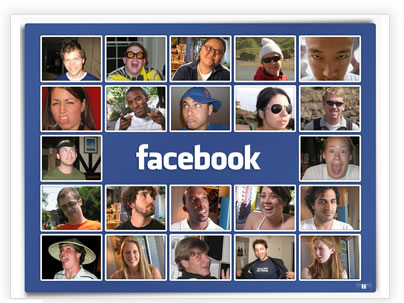
Facebook, for example, has close to 1 billion customers who don't pay a cent. Yet the company is receiving valuations of $50 billion and more — despite having just 3,000 or so employees — because of the extremely high-potential, non-purchasing value such customers provide. In a phrase, Facebook and other forward-thinking companies look to their customers to grow their businesses.

This isn't genius at work. In fact, entrepreneurs like Mark Zuckerberg and Marc Benioff of Salesforce.com, are simply recognizing — and acting upon — entirely obvious realities about customers and their desires and competencies, choosing to leverage these rather than fight against them, as so many firms do. Here are five examples:

Customers know more about each other than you know about them. That's the source of much of the stratospheric value placed on Facebook by investors. Imagine a traditional company that tried to generate the kind of information Facebook generates: real time data on what movies people are watching, where they travel, the books they're reading, the restaurants they've tried.

Facebook dispensed with all the research most companies would have tried to dig up, and instead focused on letting customers provide it. Westlaw, which provides legal research services for law firms, realized that its clients were interested in how they and the markets they serviced stacked up to other firms and markets.

So Westlaw created West PeerMonitor, which aggregates anonymized data on firms' financial and operational performance, collected from participating clients — which turned into a lucrative new business.

Customers are more credible than you are. That means they make better marketers for a firm than agencies or internal employees. SAS Canada, for example, had a serious customer retention issue several years ago — retention rates had declined from the high 90s to the mid 80s and were continuing to drop.

It was terribly frustrating to firm executives, because SAS software was doing an excellent job of keeping up with customer needs. The problem was, customers didn't realize this. A small group within SAS, led by Wally Thiessen, saw that it would be futile for SAS to keep trying to point this out, and instead built a team of 250 customer "champions" to do so.

With support from Thiessen and his team, SAS customer champions established regular events in more than 20 major cities, set the agendas, selected speakers (and made presentations, themselves) and stayed in touch afterwards in online forums and through e-newsletters. Result: retention rates rebounded back up to the high 90s.

Customers are more persuasive than you are. That means they make better sales people. Marc Benioff realized this in the early days of building Salesforce.com. Lacking the multi-million dollar budgets of competitors like Oracle and SAP, he relied instead on face-to-face meetings with prospects and customers in major city markets.

He found, to his surprise, that prospects at such events were much more interested in talking with SFDC customers than with him and his executive team, and found to his delight that 80% of prospects who attended the events wound up becoming customers themselves — an amazing close rate for any offering. And unlike sales people, SFDC's customer sales people didn't require a bit of training.

Customers often understand buyer needs better than you do. One of the great misconceptions still floating around is that customers can't articulate their needs, much less develop ideas for products to satisfy them.

A substantial body of well-established research has shown that many if not most successful innovations are customer-originated. In one compilation of studies of 1193 commercially successful innovations across nine industries by MIT's Eric von Hippel, 737 (60%) came from customers.

Companies who languish with poor success rates for their product development efforts should consider looking outside to customer innovators for this.

Based on such research conducted by von Hippel and others, 3M's Medical-Surgical Markets Division tried a last gasp project in the 1990s to kick-start its consistently poor innovation record. A team was formed to bypass the internal innovation process and search for breakthrough innovations being created by outside "lead users."

When the results were compared with ordinary product development projects at 3M, the differences were dramatic: Lead-user innovations achieved average revenue of $146 million dollars in their fifth year, compared with $18 million for internally generated innovations.

So the message has been clear for years. The remaining big challenge is getting more and more companies to recognize this and to create ways to capture this customer knowledge in their everyday operations.

Prospects in your market would rather affiliate with their peers (your customers) than with you. By nature, most all of us are open to creative new ways to affiliate with our friends and peers — the very foundation on which Facebook was originally built.

Companies are often uncertain about being able to create opportunities to affiliate that customers would embrace— but they can, as long as they avoid making the common mistake that customers want to affiliate with the company. They want to associate with their peers — meaning your customers, not you.

One example of this is Procter & Gamble's BeingGirl community for teen and pre-teen girls, which was formed initially to promote feminine hygiene products because TV and print ads made its young audience uncomfortable. P&G enlisted experts to provide content, which did little to build interest.

After that misstep, P&G created forums so that girls could talk to each other about the issues and challenges of growing into young womanhood. And with that the site took off, with girls from around the world eager to get into the conversation — and with P&G able to market its products more subtly and effectively than before.

Customers are often more apt to trust and be interested in information if it comes from a peer, rather than a company.

So remember, there are many things your customers can do better than you. How are you involving your customers to help grow your business?

Source

Bill LeeBill Lee is president of the Lee Consulting Group, Executive Director of the Summit on Customer Engagement, and author of The Hidden Wealth of Customers: Realizing the Untapped Value of Your Most Important Asset (HBR Press, June 2012).

Fixing Salespeople's Biggest Complaint: My Territory is Too Small

If you spend much time around salespeople, it won't take long before you hear them griping about the issue that is the profession's biggest trouble spot: disagreement over the market potential of a group of accounts or a territory.

Consider just a few examples.

A regional sales director says: "The Pittsburgh territory is vacant again. This is the fifth vacancy in two years. In exit interviews, the people who leave imply they don't have enough market potential to succeed."

A salesperson says: "My quota is 10% higher than last year. I've already maxed out the potential within my accounts. How am I supposed to get the growth I'm expected to deliver?"

A district sales manager says: "These district sales rankings are unfair. My district's market potential is below average and is spread across a huge geography - how can I compete with districts in easier-to-cover, more lucrative markets?"

These concerns, and many others, can be moderated with actionable measures of account or territory market potential.

Consider how market potential estimates helped a business within GE that leases over-the-road trailers to trucking, retail, and manufacturing companies. The business had ambitious revenue growth goals, and sales leaders wanted to focus sales efforts on the most attractive opportunities.

By using customer profile characteristics (such as fleet size and composition, company size, and industry) to predict customer potential, the sales force experienced a 33% increase in qualified leads in one year. GE also used the information to redeploy several sales territories into more lucrative markets.

This allowed the business to grow sales productivity by 7 percent and give back a budgeted $2 million for additional headcount — the productivity improvements allowed the sales organization to meet growth goals without adding people.

Smart sales forces know that market potential is the keystone for both strategic and tactical sales force decision-making. Market potential adds insight to sales planning. For example:

Sales force strategy and scale. If you know market potential by account segment, you can scale and deploy sales resources appropriately against opportunities and can develop segment-appropriate value propositions and sales processes.

Sales force deployment. If you know potential geographically, you can decide where to add sales headcount to capture unrealized opportunity, and where to reduce headcount without sacrificing coverage. And you can create territories that give everyone fair opportunities to succeed. This keeps salespeople engaged and allows the company to hire and retain top sales talent.

Market potential also enables better tactical sales force decision-making. For example:

Targeting. If salespeople know account potential, they can allocate their time to better leverage opportunities.

Coaching and performance management. If sales managers know account potential, they can coach salespeople on the best strategies for driving revenue growth. And they can better assess salespeople's performance, provide appropriate feedback, and rank salespeople on metrics that depend on the salesperson, not the territory.

Incentive compensation, goal setting, and recognition. If sales leaders know account potential, they can design incentive compensation plans that reward salespeople for true performance, rather than for a lucky territory. They can set territory sales goals that are challenging, attainable, and fair to all. And they can select the most deserving salespeople for award trips and recognitions.

Many sales forces do not have estimates of local market potential readily available, and developing them requires work and creativity. Some approaches include:

Buy existing data. In some industries, such as airlines and pharmaceuticals, data companies sell information on sales of all competitive products by account or local market.

Deduce the data. If you can't buy competitive sales data, you can likely buy or find data that is good market potential surrogate. A greeting card company used U.S. Census Bureau data to estimate the potential of each retail store nationwide by looking at population and average household income within a 3-mile radius. A company that sold insurance and financing as part of a bundled service offering on retail sales of motorcycles used customer demographics, competitors, the presence of local credit unions, and the onset of spring weather (which triggered an increase in motorcycle sales) to predict territory potential.

Build the data. You can conduct primary market research to create market potential data. A seller of contact lenses surveyed ophthalmologists across the country to determine the size of their practices and their need for the company's products. You can ask the sales force to conduct market research. A medical imaging company asked its salespeople to collect data on the type, manufacturer, and acquisition date of installed equipment at every hospital and imaging center in their territory.

Knowing local market potential significantly improves sales force decision-making. And estimates of potential — even imperfect ones — are better than no estimates at all. Sales organizations that are willing to invest to develop measures of account or territory market potential will see pay offs through improvements in productivity and higher sales and profits.

Written by Andris A. Zoltners, PK Sinha, and Sally E. Lorimer

Source

Selasa, 14 Februari 2012

Viral Blog Marketing

Sembilan bulan setelah peluncurannya, Notebook HP Dragon dari Hewlett Packard tidak menunjukan penjualan yang memuaskan.

Notebook dengan berat 15 pound ini dilengkapi dengan fitur hard disk sebesar 500GB dan layar 20.1 inci. HP membanderol notebooknya dengan harga $ 4,500, harga yang mahal untuk sebuah notebook.

Berbagai kegiatan promosi mulai iklan di surat kabar, majalah bahkan televisi, tidak sanggup mendongkrak penjualan HP Dragon. Kondisi ini menyebabkan manajemen Hewlett Packard harus mengambil tindakan. Mereka mengontrak konsultan Viral Marketing Buzz Corps. Buzz Corps kemudian memperkenalkan sebuah kampanye di internet dengan nama 31 Days of Dragon. Kampanye ini berjalan dari 9 Mei 2008 sampai 8 Juni 2008.

Selama kampanye itu, mereka menghubungi 31 blogger teknologi yang dinilai paling popular. Para blogger ini biasa memberi ulasan mengenai berbagai macam gadget serta produk-produk berteknologi melalui situsnya. Banyak orang mengunjungi blog mereka ketika akan membeli produk elektronik. Ulasan-ulasan mereka dianggap berguna dalam menentukan pilihan.

Para blogger ini diajak untuk memberi notebook HP Dragon secara gratis pada pengunjung situsnya. Hewlett Packard mengalokasikan waktu yang berbeda untuk para blogger ini, sehingga setiap hari akan ada situs undian yang berbeda. Para blogger ini tidak diberi kompensasi apapun dari Hewlett Packard.

Aturan yang diterapkan Hewlett Packard cukup fleksibel. Setiap blogger memiliki 1 buah notebook untuk diberikan. Blogger harus mempromosikan kampanye ini kepada blogger lainnya. Untuk menentukan pemenangnya Hewlett Packard memberikan kebebasan bagi para blogger ini untuk menentukan aturan mainnya sendiri. Setiap situs blog dapat membuat sendiri design dan promosinya.

Kampanye ini menjadi perbincangan yang hangat di internet. Situs HP Dragon mendapat 380.000 link baru ke situsnya selama 31 hari tersebut. Pengunjung masing-masing blog yang berpartisipasi juga mengalami peningkatan rata-rata 150%.

Selama 31 hari tersebut ridak kurang dari 250ribu orang di Amerika ikut berpartisipasi. Setelah kampanye ini selesai, HP Dragon mendapatkan exposure yang luas. Selama kampanye itu, para blogger menulis ulasan yang baik mengenai HP Dragon. Citra dari HP Dragon juga meningkat, dan yang lebih penting lagi, penjualan HP Dragin meningkat 84% sejak kampanye ini dilaksanakan.

Kampanye ini terbukti berhasil karena memberi keuntungan bagi semua pihak. Bagi Hewlett Packard, selain peningkatan penjualan juga peningkatan citra dan tentunya exposure serta Brand Equity dan yang paling penting adalah hubungan yang lebih baik kepada para konsumen.

Bagi para blogger, adanya kampanye ini meningkatkan jumlah pengunjung dan tentunya kepuasan dari para pengunjungannya sehingga hubungan dengan mereka akan lebih baik. Bagi para konsumen tentunya kesempatan memenangkan sebuah notebook premium dan hubungan langsung ke Hewlett Packard.

Kunci keberhasilan kampanye Hewlett Packard ini adalah kemampuan Buzz Corps sebagai konsultan dalam mengidentifikasi siapa dalam industri ini yang dapat menjadi influencer. Tidak semua orang dapat menjadi influencer. Ada beberapa factor yang diperlukan agar sesorang dapat menjadi influencer yang baik bagi produk yang akan menjadi obyek suatu kampanye Viral Marketing.

Yang pertama adalah para influencer ini haruslah memiliki kredibilitas. Kepercayaan dari para pendengarnya tentunya merupakan key success factor dari seorang influencer. Kredibilitas ini muncul dari dua hal. Yang pertama adalah keahlian. Makin akurat ulasan yang diikuti oleh pembacanya, makin tinggi kredibilitasnya. Selain itu ia harus memiliki kejujuran. Kejujuran ini tentunya harus didukung oleh obyektifitas.

Hal yang kedua yang juga penting adalah seorang influencer haruslah memiliki massa yang cukup. Massa pembaca dan pendengar ulasan inilah yang akan menjadi calon pelanggan. Mereka harus cukup dalam segi jumlah ataupun daya beli. Selain itu pastikan bahwa massa yang dimiliki oleh influencer ini merupakat target market dari organisasi.

Selain kemampuan dalam memilih influencer, kunci keberhasilan yang lain dari kampanye ini adalah strategi Hewlett Packard dalam memberikan solusi bagi para blogger. Massa memang merupakan kunci utama, baik bagi Hewlett Packard maupun para blogger. Hewlett Packard memberi bantuan solusi bagi para blogger untuk meningkatkatkan jumlah massanya dengan memberikan notebook gratis sebagai hadiah bagi para pengunjung blog.

Kesuksesan ini mengisnpirasikan Hewlett Packard untuk melanjutkannya dengan kampanye yang sejenis. Kali ini dengan nama HP Magic Giveaway. Sayang sekali, kampanya ini masih hanya terbatas pada warga negeri Barack Obama. Kapan kira-kira warga Indonesia dapat ikut berpartisipasi?

Penulis: James Indra Winawan, ST, MM.

Sumber